Read 50 mL and 20 g separately
The product material states 50 mL and illustrates roughly 20 g of powder. Milliliters describe volume; grams describe mass. The 20 g figure is the seller’s approximate example, not a recommended serving or a universal conversion for all powders.
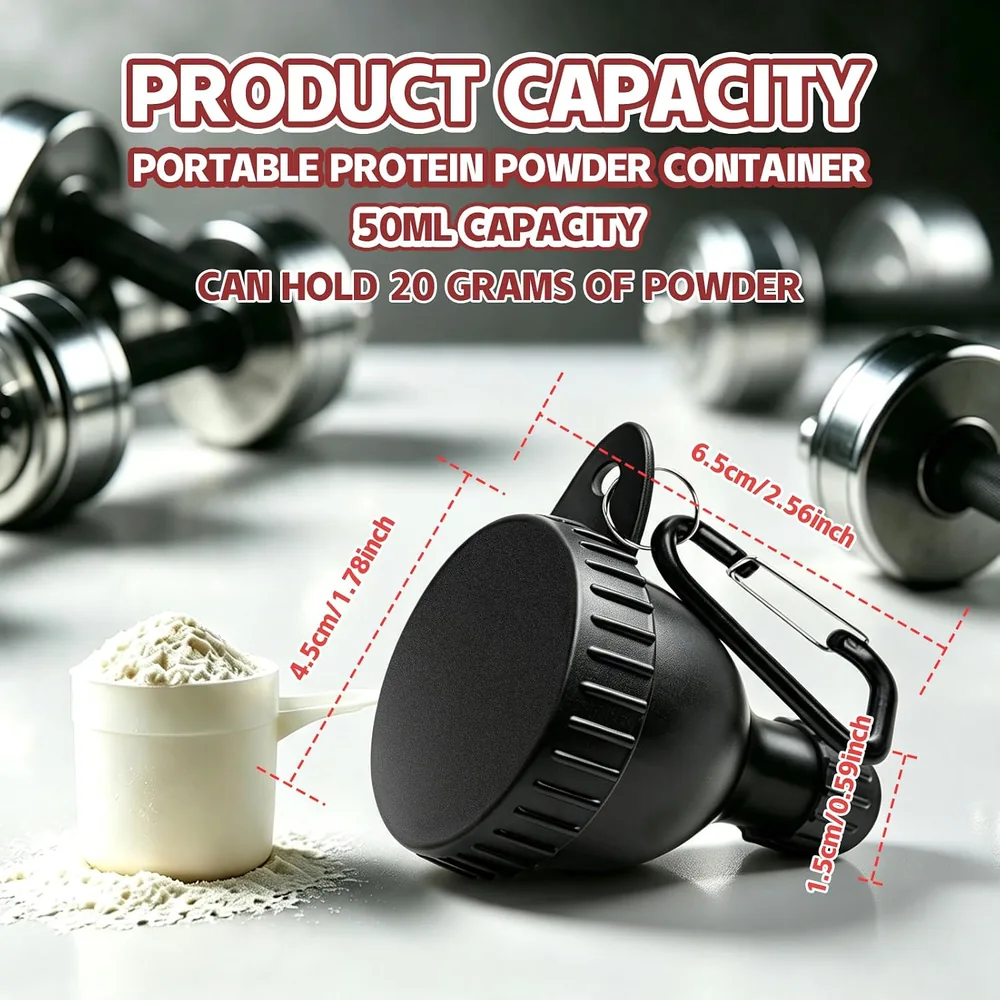
Seller-supplied graphic. The powder type and filling method behind the 20 g example are not specified.
Measure the intended amount first
Follow the powder’s own label. If it specifies mass, use a measuring method suitable for that instruction. If it specifies a supplied scoop, follow those directions. Do not fill the storage container first and call the result a serving.
NIST’s units reference distinguishes mass and volume. A volume cannot establish powder mass without further information about the actual contents and conditions.
Complete the portion-fit worksheet
| Record | Enter your observation |
|---|---|
| Powder | Product name and variety from its original label |
| Intended amount | Separately determined amount and unit |
| Measuring method | Actual tool and label directions used |
| Closure | Whether both caps fit normally with that amount inside |
| Uncertainty | Residue, compression or closure issues observed |
This is a blank worksheet for your setup, not a test result. Changing powder variety or filling technique can change what fits.
Decide what to carry
Use the container only when the planned amount fits without pressing powder into the closure. If it does not, select more suitable storage. The graphic’s approximate 20 g example is not a verified maximum for every powder.
The graphic also shows 6.5 cm, 4.5 cm and 1.5 cm annotations. These size labels do not establish the powder’s mass or a calibrated fill line.
Return to the powder funnel capacity overview.